Car First Aid Kits — Assessment

I am no doubt jumping the gun a little posting this, but I have at least started the process of rebuilding the first aid kids in our cars.

It’s been one of those things I have meant to do for over a year now, after having attempted to use a bandage out of the car last spring only to discover that it was incredibly cheap and deteriorated from years in a hot car that it would not stick to anything.

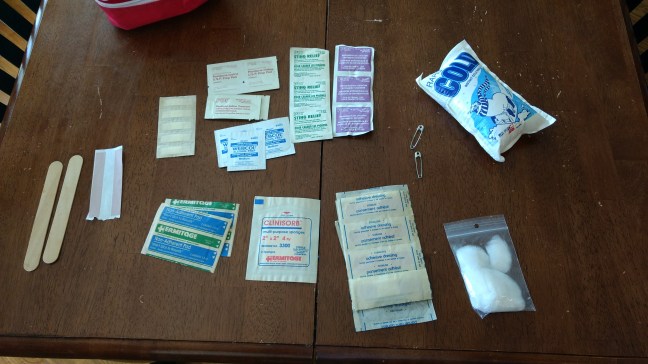
So, a year later… I unpacked the kit to look at what all would need replaced:
IMG_20170303_100020182.jpg

Nothing in that picture looks too amazing. The “instant cold pack” seems to have failed sometime in the past, and much like the bandage I tried before… every single adhesive item in the kit seems questionable.

With some careful reading, I eventually found a label with an expiration date… January 2001. Suddenly it seems perhaps the blame for poor performance falls more on me for using a kit that is 16 years expired rather than deficiencies in the initial quality of the kit!

I have ordered an assortment of items to restock with… the final value of the refill is going to exceed what just replacing the whole thing would cost, but if we end up needing even so much as a band-aid, having the nice stuff will start to seem worth it.

Does this feel at all like a repeat? Turns out I did a good sized post about our in-home kit before

-Jordan
First Aid Kit

One of the nice things about working with the scouts is that I get frequent reminders of things I should probably be doing. One of those things is “have a first aid kit at home”

We had some stuff, and I have small kits in our cars from a long time ago.

One of the interesting quotes I heard on the subject was from the EMT who provided our basic medical training when I went through the adult leader training almost two years ago. To the best of my memory what he said was “if you have something in your first aid kit, and you don’t know what it is or what it’s for you need to get rid of it” he then went on to recommend you just put together your own kit with only the essentials.

I finally got around to starting on that a few weeks ago:

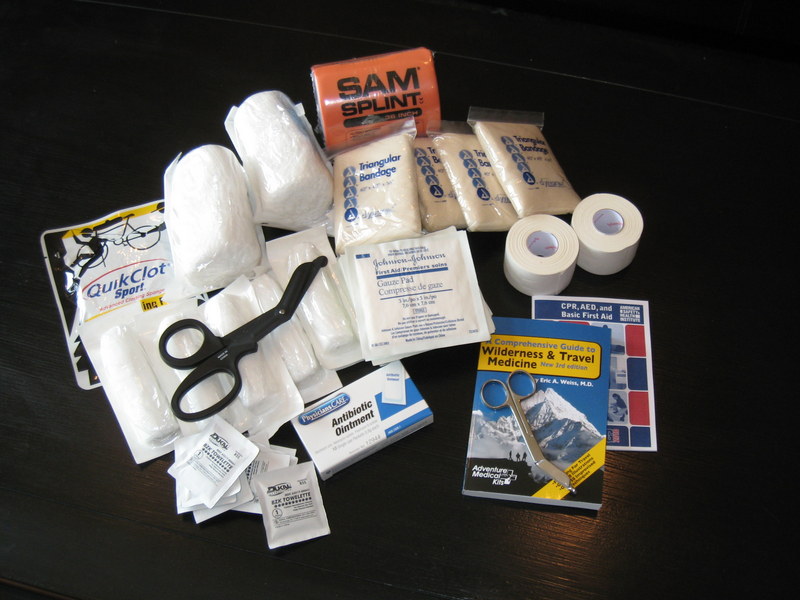
I mashed together lists from the Red Cross and the Boy Scout Handbook plus a few odds and ends I had heard were important. I still have a few things left to add, and I haven’t figured out the perfect container for this stuff yet, but I am pretty proud of it.

A few notes:

I probably went overboard on the scissors. Those black ones in the picture are emergency room grade trauma sheers, and if the Amazon reviews are to be believed, will hold up to years of cutting off shoes and belts without issue. Ironic I suppose that I went cheap a month back on a saw I hope to use many times, and then spent extra on sheers I hope to never use.

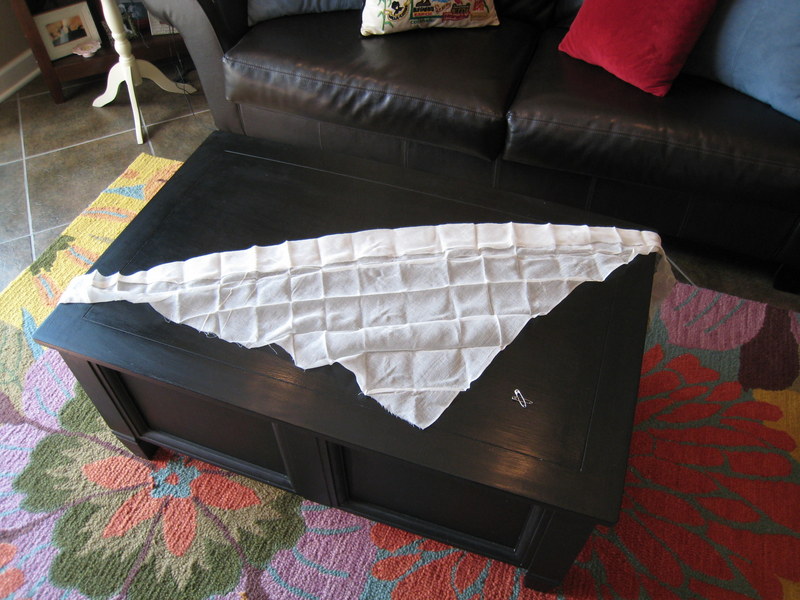
What is a “triangle bandage”? To be honest I didn’t know, despite finding them on nearly every first aid list. A little searching indicated they were incredibly useful, and a must-have in a first aid kit. Well you can see the packs in the above picture, and here is one unpacked:

The material is considerably heavier than just gauze, but still feels like it would absorb liquid if you needed it too. I think the idea is the bandage serves as an outer wrap, considering the first aid kid contains about four different kinds of sterile gauze pack. The package included two safety pins so you can hold in in position once you get something figured out. It most reminds me of a slightly over-sized Scout neckerchief, and I imagine you could use any of the techniques from the Scout manual that called the neckerchief with this. (because even the most prepared former Scout probably isn’t wearing his neckerchief 20 years later)

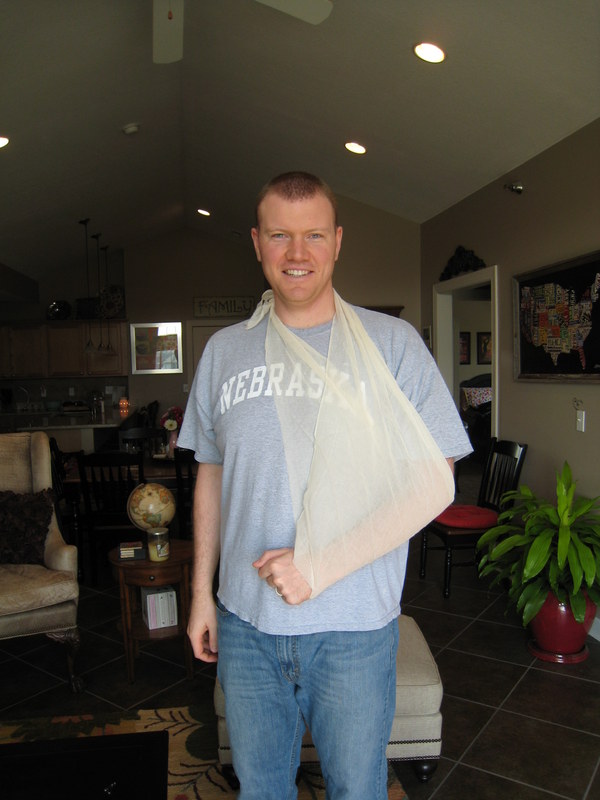
One more picture to give a sense of scale:

It’s a large bandage! Side note, Heather protested loudly at taking this picture… apparently she feels demonstrating first aid items is too close to needing them… or something, maybe she just thought I was enjoying the whole first aid kit thing a little too much 🙂

-Jordan